How AI Knows What You Want Before You Do: The Magic of Predictive Intelligence
Susalabs Team
Author
Have you ever thought about how Netflix seems to know what the perfect show to binge watch on a Friday night is or how Amazon seems to know something you were thinking of buying? Coincidence? No - it is an incredible power of predictive AI to know what is best for you by combining market patterns and your digital behavior, and AI is observing your behavior online so that they know your needs better than you can say it yourself.
It's not magic, even though it feels that way, to accurately have a handle on human behavior, while humans do not even really comprehend how to formulate humans or behaviors. It is not in AI's ability to predict behavior that is fascinating, it's that it layers in different taxonomies to analyze immeasurable amounts of data. Think about it like this: while we are going through the choices of a streaming channel for all family members, AI has already been applied to thousands of users who have indicated viewing preferences, similar to yours, combined with their previous viewing, business trends, and time of day, to select suggestions that feel uncanny.
A transformative experience: it's not in using AI, it is not in replacing a human decision or human descriptive experience, it is simply in removing the guess work , creating precision experiences that feel near telepathic. From you wake to your device, and at night making your final purchase, the personalized journey of predictive experiences is working quietly.

The Science Behind Predictive AI
To recognize how AI predicts human behavior, we must come to grips with an intricate dance of data, algorithms, and behavioral patterns. Predictive AI rests upon a simple yet powerful principle: past behavior is the best predictor of things to come. However, the sophistication comes with how AI systems recognize, analyze, and apply patterns of behavior at scale and speed never before possible.
It all starts with data and lots of it. Every click, every purchase, every pause, every skip, every share, every search creates a digital breadcrumb trail that when collected and viewed together becomes a rich picture of a person's preferences and underlying behaviors. However, no amount of raw data has any meaning until it is put into action through algorithmic intelligence.
Deep Learning adds another layer of sophistication, modeling the neural networks of the human brain, processing information in multiple layers of nodes connected to one another. This is particularly effective for identifying complex patterns in unstructured data like images, audio, and natural language, allowing AI systems to extract context and nuance in a way traditional algorithms would miss.
Natural Language Processing (NLP) adds another dimension by enabling AI to understand and interpret human communication. When you type a search query, post on social media, or write a product review, NLP algorithms analyze not just the words you use but their context, sentiment, and implied meaning.
The predictive process follows a logical flow: Data collection captures user behavior across multiple touchpoints. Pattern recognition algorithms identify recurring behaviors and preferences. Predictive modeling creates mathematical representations of likely future actions. Finally, personalized outcomes deliver customized experiences based on these predictions.
This process happens in real-time, often within milliseconds of user interaction. When you open Netflix, the recommendation engine has already analyzed your viewing history, compared it with millions of similar users, factored in current trending content, and generated personalized suggestions before the homepage fully loads.
Everyday Examples of AI Knowing Before You Do
E-commerce Intelligence
Amazon's recommendation appliance is perhaps the most advanced demonstration of predictive AI in common commerce. Over 80% of Netflix content is discovered through personalized recommendations, and a similar rate is achieved on Amazon, where 35% of the business profits are attributed to product recommendations.
The system looks at what you have bought, what you have viewed, how long you held a deliberation on the products featured on the webpage, what you added to your wishlist and what similar customers ultimately purchased. It takes systematic patterns even into account, seasonal buying patterns, price sensitivity, and even what time of the day you browsed and when problems based on your browsing behaviors you would have later recommended you as the next best is the best product for you.
Predictive AI is often viewed as highly beneficial to inventory management. Predictive AI allows business, for example Amazon, to place products closer to customers before they even make an order. Predictive AIs reference historical purchase data, systematic patterns, seasonal buying patterns, and everyday real time demand signals, to predict the products that will be offered and needed for the area. Predictive AI optimizes the cost and time, and ultimately customer satisfaction through a process even before the items are offered for sale to the customer.
Streaming Platform Prescience
Netflix's recommendation algorithm has gained a great reputation for its accuracy — and it deserves it. Over 80% of the content being watched on Netflix comes from personalized recommendations, totaling billions of viewing hours driven by predictive intelligence.
The recommendation system doesn't only analyze your viewing history. The system also considers the time of day that you usually watch certain content, whether you are a binge-watcher or prefer certain episodes at a time, how quickly you start to watch content after the app is open, whether you tend to pause content, or if you rewind scenes, etc. This behavioral data combines to create incredibly nuanced user profiles that not only predict what you will want to watch, but also when you will want to watch it.
Spotify has taken similar steps with music, creating personalized playlists to introduce users to new artists while maintaining that sense of comfort with familiar songs. Spotify's Discover Weekly playlist, similar to Netflix's recommendations, analyzes not only the songs and artists you've already listened to, but also the listening patterns of millions of other users with similar preferences, in order to create playlists of songs you've never heard before but will statistically be most likely to enjoy.
Social Media and Targeted Advertising
Social media platforms leverage predictive AI to create advertising experiences so targeted they can feel invasive. Facebook, Instagram, and Twitter analyze your posts, likes, shares, comments, and even the amount of time you spend viewing specific content to build comprehensive behavioral profiles.
The sophistication extends beyond your direct interactions. AI systems analyze your connections' behavior, inferring interests and preferences based on your social network. If your friends frequently engage with fitness content, you're more likely to see health and wellness advertisements, even if you haven't explicitly expressed interest in these topics.
Predictive advertising algorithms determine not just which ads to show you, but when and how to present them for maximum effectiveness. They consider your emotional state inferred from recent posts, your activity patterns, and even your device usage to optimize ad timing and placement.
Healthcare and Wellness Prediction
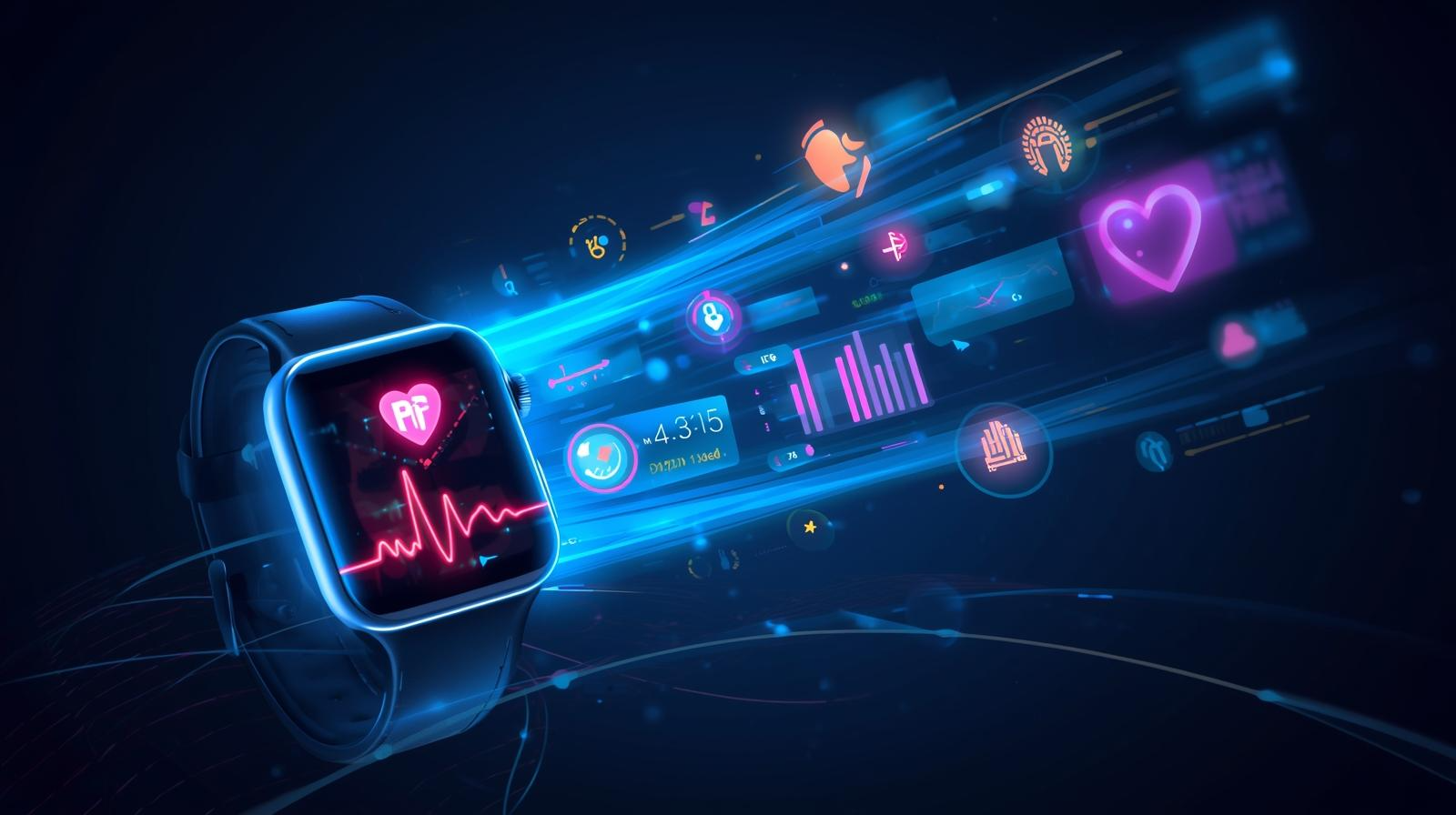
Wearable devices represent one of the most promising applications of predictive AI, transforming from simple fitness trackers into sophisticated health monitoring systems. AI-powered algorithms can predict heart attacks or detect early signs of chronic conditions, sending immediate alerts to healthcare providers and patients.
Modern smartwatches continuously monitor heart rate, sleep patterns, activity levels, and other vital signs, using machine learning algorithms to establish individual baselines and detect anomalies that might indicate health issues. Some devices can predict illness onset days before symptoms appear by recognizing subtle changes in biometric patterns.
Predictive healthcare extends beyond wearables to comprehensive health management systems that analyze genetic data, lifestyle factors, and environmental conditions to forecast health risks and recommend preventive measures. These systems can predict everything from optimal exercise routines to personalized nutrition plans based on individual metabolic patterns.
Financial Services and Banking Intelligence
Banks and financial institutions utilize predictive AI for forecasting customer needs and fraud mitigation with remarkable accuracy. Credit card companies examine spending patterns to forecast potentially fraudulent transactions in real-time and proactively block suspicious transactions based on the customer's spending behavior even before the customer has been alerted to the compromised account.
Predictive banking also includes personalized financial advice, in which AI systems make recommendations based on analysis of income patterns and spending habits – including stated financial goals to personalize investment strategies, savings recommendations, and loan product recommendation strategies. Given the AI-based predictive capabilities, these systems have the ability to proactively market existing financial products and establish outreach, versus reacting to a request for information about products.
As an alternative to personalized financial advice, systems termed robo-advisors use predictive algorithms to assist in the management of investment portfolios, automatically rebalancing those portfolios based on adjust prediction based on investors' risk tolerance and predicted performance. Robo-advisors can process more financial data than would be impossible for the human financial advisor to analyze manually and use that data to modify investment portfolios.
How Businesses Benefit from AI Predictions
Smarter Customer Engagement
Predictive AI enables businesses to move from reactive customer service to proactive engagement. Instead of waiting for customers to contact support, AI systems can predict when users are likely to experience problems and intervene with helpful resources or direct assistance.
Email marketing becomes significantly more effective when powered by predictive intelligence. AI systems analyze open rates, click patterns, and purchase behavior to determine the optimal timing, frequency, and content for individual recipients. This personalization can improve email engagement rates by over 200% compared to generic campaigns.
Customer journey mapping benefits enormously from predictive insights, enabling businesses to anticipate where customers might encounter friction and optimize those touchpoints before problems occur. This proactive approach reduces customer frustration and improves conversion rates throughout the sales funnel.
Improved Retention and Loyalty
Churn prediction is among the most beneficial potential business applications of AI. Executed simply, churn prediction uses customer behavior patterns, behavioral engagement analytics, and customer satisfaction measures to recognize customers who are likely to cancel their service or switch to a competitor.
With proper identification of potentially at-risk customers, companies can implement appropriate retention measures such as personalized offers, enhanced customer support, or product recommendations to better engage prospectively at-risk customers. Companies that use churn predictive behavior analytics on their customers can, across business areas, on average retention rates that are 15-25% greater than when operating a reactive models.
Predictive intelligence improves loyalty programs with relevant rewards, experiences and incentives that prompt individual consumers to re-engage in a repeat business behavior. AI, for example, can predict the best time to reward a customer, the type of incentive that a particular customer would respond to positively, and how to best communicate that incentive to a customer.
Operational Efficiency Through Forecasting
Demand forecasting changes the way the business runs by improving inventory management, workforce allocation, and resource management. Retailers are using predictive AI to forecast seasonal trends, regional preferences and developing product demand to reduce overstock and stockouts.
The ability to apply predictive analytics to the forecast of supply chain disruptions, demand shifts and logistics is a major benefit of predictive leads and insights. Predictive analytics systems can suggest alternative suppliers, modify delivery routes, and optimize warehouse workload based on predictive conditions.
Predictive analytics that anticipate needs before they become catastrophic improve energy usage, maintenance schedules, and capacity planning. Manufacturing companies report 20-30% improvement in efficiency using predictive maintenance systems to avoid unexpected equipment failure.
Better Decision-Making with Real-Time Insights
Business intelligence powered by predictive AI provides leaders with actionable insights rather than historical reports. Instead of learning what happened last quarter, executives can understand what's likely to happen next quarter and adjust strategies accordingly.
Market trend prediction helps businesses identify emerging opportunities and threats before competitors. AI systems can analyze social media sentiment, search trends, and consumer behavior patterns to predict market shifts months in advance.
Risk assessment becomes more sophisticated with predictive models that consider multiple variables and scenarios. Financial institutions, insurance companies, and investment firms use AI to evaluate risk with unprecedented accuracy, enabling better pricing and decision-making.
The Magic Ingredients: Data + AI + Context
Why Data Alone Isn't Enough
Raw data without context is like having all the ingredients for a gourmet meal without knowing the recipe. Businesses often assume that collecting more data automatically leads to better insights, but the reality is more nuanced. Effective predictive AI requires not just quantity of data, but quality, relevance, and most importantly, context.
Context transforms data points into meaningful insights. Knowing that a customer viewed a product for 30 seconds is data; understanding that 30 seconds is unusually long for that customer and product category provides context that suggests strong purchase intent. Context considers the customer's history, current circumstances, external factors, and comparative behavior patterns.
The timing of data collection significantly impacts its predictive value. Customer behavior during holiday seasons differs dramatically from typical patterns, and AI systems must account for these contextual variations to maintain accuracy. Similarly, economic conditions, weather patterns, and cultural events all provide crucial context for interpreting behavioral data.
Role of AI in Connecting Invisible Dots
Human analysts struggle to identify complex patterns across millions of data points, but AI excels at discovering non-obvious relationships that drive predictive accuracy. These connections often span seemingly unrelated datasets, creating insights that surprise even experienced business professionals.
For example, AI might discover that customers who purchase certain products on weekday mornings are 40% more likely to upgrade to premium services within 60 days. This correlation might be invisible to human analysis but becomes actionable intelligence when identified by machine learning algorithms.
Cross-domain pattern recognition enables AI to leverage insights from one industry to improve predictions in another. Techniques developed for predicting movie preferences can be adapted for recommending financial products, while algorithms designed for supply chain optimization can improve healthcare resource allocation.
Business System Integration
Modern predictive AI achieves maximum effectiveness when integrated with existing business systems like CRM and ERP platforms. This integration enables AI to access comprehensive customer profiles, transaction histories, and operational data necessary for accurate predictions.
CRM integration allows predictive models to incorporate customer interaction history, support tickets, and relationship data into their analyses. This comprehensive view enables more accurate customer lifetime value predictions, churn risk assessment, and personalized engagement strategies.
ERP integration provides AI systems with operational data including inventory levels, production schedules, and financial metrics. This operational context enables predictive models to consider business capacity constraints when making recommendations, ensuring predictions are both accurate and actionable.
API-first architectures enable predictive AI systems to integrate seamlessly with multiple business platforms, creating unified intelligence that spans the entire organization. This integration ensures that predictive insights are available where and when they're needed for decision-making.
The Ethical Side of Prediction
AI and Data Privacy
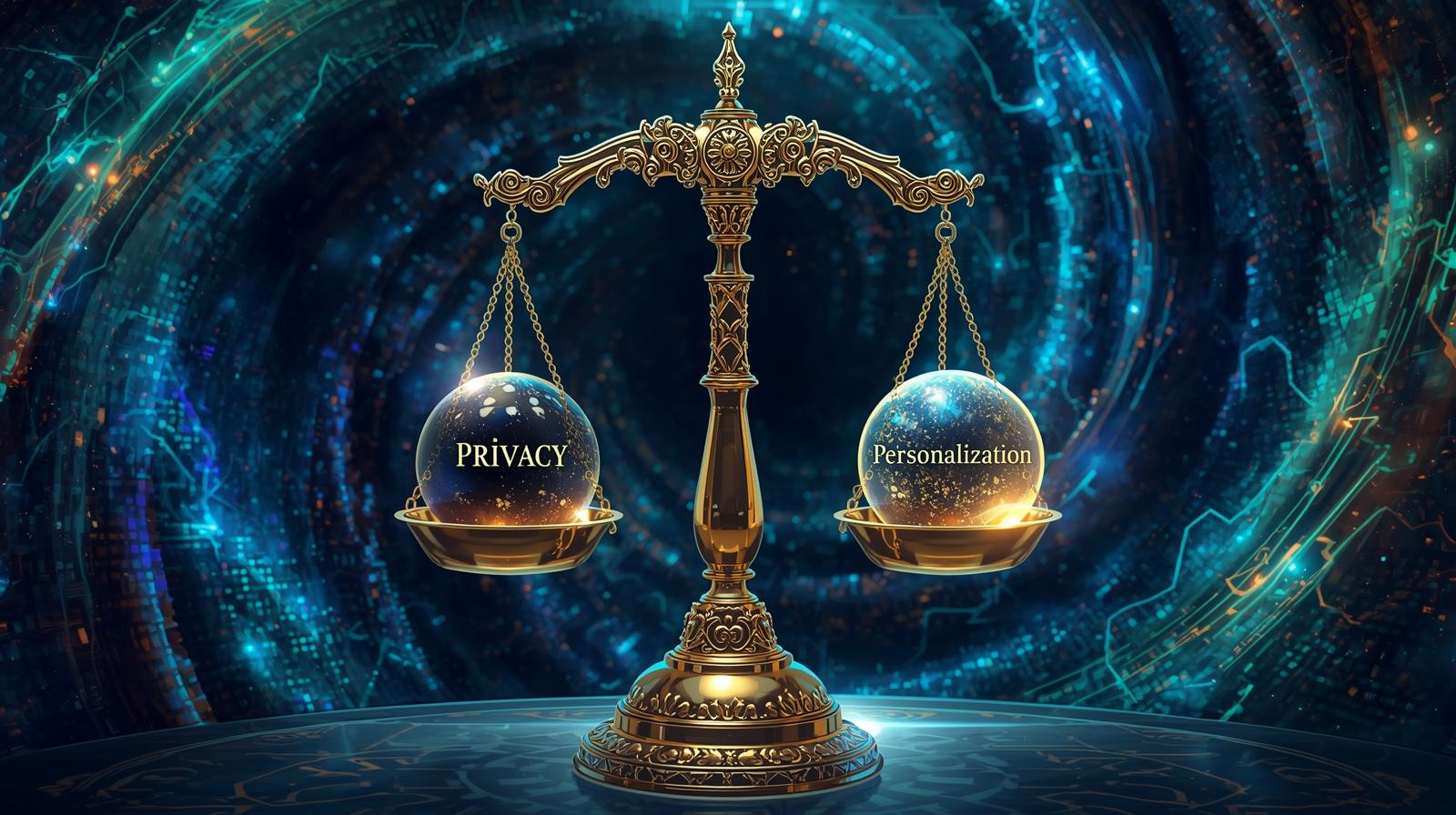
The power of predictive AI raises important questions about privacy, consent, and data ownership. When AI systems can infer personal information that users never explicitly provided, the boundaries of privacy become blurred and complex.
Data collection practices must balance predictive accuracy with user privacy expectations. Transparent data policies, granular consent mechanisms, and user control over data usage are becoming essential requirements rather than optional considerations.
Regulatory frameworks like GDPR and CCPA are evolving to address these challenges, requiring businesses to implement privacy-by-design principles in their AI systems and provide users with greater control over their data and its usage.
Security Challenges and Solutions
Predictive AI systems become attractive targets for cybercriminals due to the valuable personal and behavioral data they contain. Protecting these systems requires sophisticated security measures that address both technical vulnerabilities and social engineering attacks.
Data encryption, access controls, and audit trails provide technical protection for AI systems and their datasets. However, security must be balanced with system performance and accessibility requirements to maintain predictive accuracy and user experience.
Model security presents unique challenges, as adversaries might attempt to manipulate AI predictions by providing misleading input data or reverse-engineering algorithmic approaches. Robust security frameworks must protect both the data and the predictive models themselves.
Transparency in AI Decision-Making
The "black box" nature of some AI algorithms creates transparency challenges when users want to understand how predictions are made. Explainable AI techniques are being developed to provide insights into algorithmic decision-making processes.
Algorithmic bias represents a significant concern when predictive models inadvertently discriminate against certain user groups. Regular auditing, diverse training data, and bias detection tools are essential for ensuring fair and equitable AI predictions.
User education about AI prediction systems helps build trust and enables more informed consent decisions. When users understand how predictive systems work and what benefits they provide, they can make better choices about their data and privacy preferences.
Future of Predictive AI: What's Next?
Hyper-Personalized Experiences
The future of predictive AI involves moving beyond broad demographic categories to truly individual personalization. AI personal assistants will understand your unique preferences, communication style, and decision-making patterns to provide increasingly sophisticated support.
Contextual computing will enable AI systems to consider your current location, schedule, mood, and immediate circumstances when making predictions and recommendations. This environmental awareness will create experiences that feel more intuitive and helpful.
Predictive personalization will extend to physical environments through IoT integration, with smart homes, offices, and public spaces adapting to individual preferences automatically. Your preferred lighting, temperature, and music will be predicted and adjusted based on your presence and behavioral patterns.
Predictive Healthcare Revolution
AI-powered algorithms could predict heart attacks or detect early signs of chronic conditions, sending immediate alerts to healthcare providers and patients. The future holds even more sophisticated health prediction capabilities that could transform preventive medicine.
Genomic data integration will enable AI to predict health risks and optimal treatments based on individual genetic profiles combined with lifestyle and environmental factors. This personalized medicine approach could prevent diseases before they manifest symptoms.
Mental health prediction represents an emerging frontier, with AI systems analyzing communication patterns, behavioral changes, and biometric data to identify early signs of depression, anxiety, and other psychological conditions.
Autonomous and Proactive Systems
Self-driving vehicles represent just the beginning of truly autonomous AI systems. Future applications will include autonomous financial management that optimizes investments and spending without human intervention, and autonomous home management that handles utilities, maintenance, and security based on predicted needs.
Proactive customer service will anticipate problems and resolve them before customers experience disruptions. AI systems will predict service outages, product defects, and user difficulties, taking corrective action automatically.
Pre-emptive business intelligence will enable organizations to adapt to market changes before they fully materialize, adjusting strategies and operations based on predicted conditions rather than reacting to current events.
Real-World Success Stories
Netflix's Recommendation Engine Mastery
Netflix's journey from DVD-by-mail service to streaming giant illustrates the transformative power of predictive AI. More than 80% of content viewed on Netflix comes from personalized recommendations, representing a fundamental shift in how people discover entertainment.
The company's investment in recommendation technology extends beyond simple collaborative filtering to sophisticated algorithms that consider content attributes, viewing context, and user engagement patterns. Netflix reportedly saves over $1 billion annually through reduced customer churn attributable to effective personalization.
Netflix's success demonstrates how predictive AI can transform not just customer experience but entire business models, enabling new revenue streams and competitive advantages that would be impossible without intelligent personalization.
AI-Powered Predictive Shopping
Amazon's anticipatory shipping patent represents the ultimate expression of predictive commerce—shipping products to customers before they've ordered them. While not fully implemented, this concept illustrates the potential for AI to anticipate needs with extraordinary precision.
Current applications include predictive inventory positioning that moves products closer to customers based on anticipated demand, reducing delivery times and logistics costs. Amazon's recommendation engine drives over one-third of their revenue through suggestions that customers find genuinely valuable.
The company's Alexa ecosystem extends predictive capabilities into daily life, automatically reordering household supplies, suggesting recipes based on dietary preferences, and managing smart home devices based on predicted usage patterns.
Google Maps and Commute Intelligence
Google Maps exemplifies predictive AI in everyday utility applications, transforming simple navigation into intelligent mobility assistance. The system predicts traffic conditions, suggests optimal routes, and estimates arrival times with remarkable accuracy.
The predictive capabilities extend beyond traffic prediction to include parking availability forecasting, public transportation delays, and alternative route suggestions based on real-time conditions. Google processes location data from millions of users to create predictive models that benefit the entire user community..
The success of Google Maps demonstrates how predictive AI can create value through collective intelligence, where individual user data contributes to insights that benefit all users while maintaining privacy through anonymization and aggregation.

The Future Is Predictive
The shift from reactive business operations to predictive business operations is more than a technological shift; it’s a shift in how organizations create value and serve their customers.
AI's increasing ability to anticipate needs, prevent problems, and personalize the customer experience is producing industry transformation and new competition.
The confluence of AI, IoT, and cloud computing is generating historically unprecedented opportunities for predictive applications that would have seemed like science fiction until a few years ago. Predictive AI is quickly becoming the basis for intelligent business operations, whether it’s in health monitoring to prevent sickness to supply chains anticipating disruption.
Ready to harness the power of predictive AI for your business? SusaLabs specializes in developing intelligent AI solutions that transform raw data into actionable business insights. Our expert team combines cutting-edge artificial intelligence capabilities with deep industry knowledge to create predictive systems that drive measurable results.
Whether you need customer behavior prediction, demand forecasting, personalized recommendation engines, or intelligent automation systems, SusaLabs has the expertise to turn your data into a competitive advantage. Our comprehensive approach includes everything from AI strategy development to system implementation and ongoing optimization.
Our AI-powered solutions have helped businesses across industries improve customer engagement, optimize operations, and create new revenue streams through intelligent prediction and automation. From healthcare predictive analytics to e-commerce personalization, we build AI systems that deliver real business value.
Contact SusaLabs today to discover how predictive AI can eliminate guesswork from your business operations and create the precision-driven experiences your customers expect in the age of intelligent technology.